Whoa. I’m in the 25 year ELCA anniversary book

I don’t mean to toot my own horn, but I’m kindof a big deal.

In the ELCA’s “Stories of Faith in Action,” the promotional 30 page booklet celebrating the ELCA’s 25 years as a denomination, there’s a timeline highlighting 25 years of stories from the ELCA. The timeline spans 4 pull-out pages. This is what the fourth page looks like.

ELCA's 4th timeline page

Notice anything particular? Maybe in the 2010 column?

A closeup of the 2010 column

I’m in the Fund for Leaders picture. Well 2/3rds of me. So maybe I’m only 2/3rds of a big deal. But I’ll take it.

Care Package

Today, at the office, I received a package.

At first, I didn’t recognize the return address. Did my wife order something online again? Is this a purchase from Etsy? Did I, in a state of exhaustion and sleep depravation, order something strange while Oliver was up in the middle of the night? What IS this unknown box that is sitting on my desk.

Sitting.

Watching me.

Tempting me to open it.

So I did.

On top was a card. I ignored it at first and found a highlighter in the box. And then there was some coffee – a bag of unpopped microwave popcorn – and a little bottle of hand sanitizer. This struck me as all so…strange. I opened the card to discover that the LTSP alumni board had sent me a care package for my internship. How nice. If I knew it was coming, I would have not bought lunch today.

But I learned that a friend received a bag of skittles. I got no skittles. I am jealous.

Update: I was informed that I forgot to add an important part to this post. THANK YOU. I really am grateful to be remembered by the seminary. It was an unexpected surprise but a lovely one!

The Hue of Paradox

I’m still not sure how to handle this.

It has taken me awhile to approach this story of a Lutheran pastor forced to apologize for participating in an interfaith memorial service. Most of my colleagues-in-arms tackled this last week and said everything I would have. Beyond pointing out LC-MS and ELCA differences, there was much theological discussion about Jesus, his ministry, and the role of the church in the midst of death, tragedy, and evil. Much was written – and quite a bit of it was better than I could ever compose.

I don’t have anything to add nor earth shattering to point out. Rather, I hope this isn’t forgotten. I hope I don’t forget it. Because, well, what happened there is…it’s not abnormal. When I look at my own life, and what it means to be a confessing Christian, I find myself making theological decisions like this everyday. My life is a series of decisions – decisions that can be underpinned by a theological framework and dimension that will (or will not) influence the decided course of action. Even if the decision is from the gut, the theological underpinning can still shine through. Not everyone has to make the same exact decision this pastor did – but, every day, the issue of theology is played out in every aspect of my life. This can’t be compartmentalized our – nor removed. Even deciding who to talk to at work, or whether to give up your seat on the subway – that can carry the underpinning of theological discourse and understanding. Individual actions or behaviors can’t be excluded, or removed, from a theological framework. A Lutheran Christian understanding of the person is holistic. The person cannot be divided into compartments, with some parts objective, some thoughts seen as unnecessary of grace, and some decisions as just automatic and not tied to theology. A Lutheran Christian understanding seems takes a person as they are. All of the person needs grace; all of the person needs love; all of the person is a sinner; and, through baptism and the gift of faith, all are saints. To consider the total of a person, we end up having to consider the paradox that is the person. And that’s not an easy thing to actually have to deal with when you have to live in a world of decisions and choice.

That pastor made a choice to witness in the midst of grief and evil. Their higher ups made a choice to point towards a tradition rooted in the need for clarity and distinction. The rest of us took a look at what happened and either rooted for distinction or saw division where there should be unity. No matter how I fall in this discussion (and, to be honest, I am on the side of unity in the face of evil), I am reminded that paradox and murkiness is the true hue of what it means to live a human life. And, as a Lutheran, if I’m unwilling to point out that truth and to live in the midst of contradiction and hope in that which is clear – the Word of God – well, I’m not worth the paper my candidacy papers were written on.

Jesus – Holy in Disguise? A Transfiguration Sermon

Exodus 34:29-35; 2 Corinthians 3:12-4:2; Luke 9:28-43a

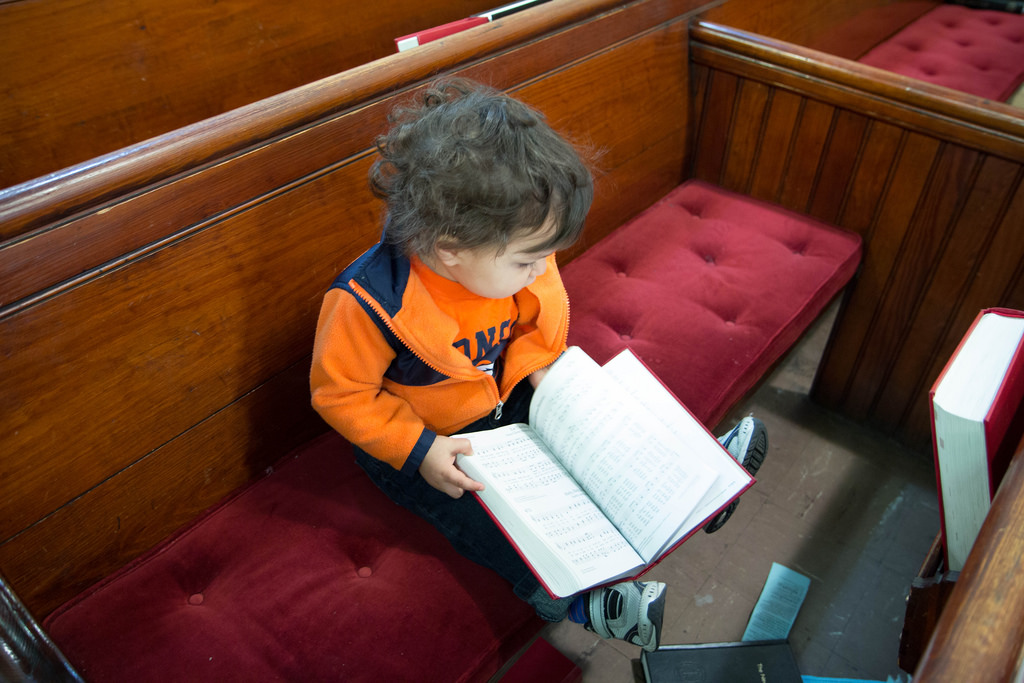
transformers-optimus-prime When I was young ‚Äì like five or six ‚Äì my parents would drag me to church every-so-often. It wasn’t every week ‚Äì might not have been every month ‚Äì but, it happened. I’d end up sitting in the car for a twenty minute drive to church, and we’d all find a pew in the back to sit in. Its funny because I don’t remember what the outside of the church looked like ‚Äì but I remember the pews. My brother and I would squiggled into one, sit on those velvet kneelers, and we’d have pockets full of toys we brought to play with during the service.

Now, as a child of the late 80s, I had my fair share of action figures. Some Sundays, we’d have some WW2 toys ‚Äì maybe a tank or two. Matchbox cars were also there because we’d beg our parents to buy some whenever they went to the grocery store. He-man, Skeletor, Tygra, Leonardo, Donatello, Darth Vadar, Han Solo – for two short kids, we had an awfully lot of large pockets weighed down with toys ‚Äì and we’d do what church was for us ‚Äì play time on a pew. It was a lot of fun. And every once in awhile ‚Äì we’d bring a Transformer or two to complete our toolbox of mischief.

I was never a huge Transformer fan but I loved how they worked. I loved how it was a truck or helicopter or plane ‚Äì and that it turned into this giant robot that battled other giant robots. And their story is simple ‚Äì living robots from a distant planet landed on Earth and disguised themselves as everyday machines. They had enemies ‚Äì robots who would come to fight them and take over Earth ‚Äì and the good Transformers, led by a truck named Optimus Prime, would battle them, there would be some cliff hangers ‚Äì a few good guys would almost die ‚Äì but, in the end, they’d win, the earth would be saved ‚Äì and the good Transformers would go back to their day jobs of pretending to be useful machines that their human pals would drive around. And those Transformers had a wonderful tagline ‚Äì Robots in disguise ‚Äì robots pretending to be something else unless they’re needed to save the day.

So is that our story from Luke today ‚Äì is this Jesus as the ultimate transformer? Jesus revealed as God-in-disguise ‚Äì or a Jesus with two modes of being ‚Äì and the bright, shiny, divine, obviously, amazing form of Jesus ‚Äì is that the point here? Is Jesus like the giant robots of the 1980s ‚Äì here to hide in our disguises until he’s needed to be the superhero that saves the day?

Between last week’s reading and this week’s ‚Äì we’ve skipped a lot of Jesus’ in his ministry. Jesus has been busy healing, preaching, telling parables, reaching out and including the outsider, and he’s developed this pattern of going off and praying ‚Äì but this time is different because he asks three of his companions to come with him – Peter, John, and James ‚Äì disciples who would become symbols and centers of Christianity.

And so Jesus and his friends go up a mountain – and while praying ‚Äì something amazing happens ‚Äì Jesus’s appearance changes. That’s actually what Transfiguration means ‚Äì to be transfigured is to have our appearance ‚Äì the outside ‚Äì changed – to be different from what we were before. So Jesus ‚Äì this man that the disciples had traveled with ‚Äì is changed. His face is changed, his clothes become white. Jesus becomes this bedazzled amazing creature ‚Äì and then ‚Äì suddenly, Jesus is not alone.

Moses and Elijah ‚Äì these spiritual giants ‚Äì appear besides Jesus. Moses ‚Äì who climbed Mt Sinai and received the law and ten commandments ‚Äì who’s face shined bright when he encountered God – is met by Elijah ‚Äì a prophet with his own history of mountaintops ‚Äì a prophet who did battle with the ancient god Baal and defeated Baal’s prophets – they stand next to Jesus ‚Äì and they talk ‚Äì they talk to Jesus about his future. And as the three disciples watch this scene unfold ‚Äì they’re dumbfounded. This is… this is awesome. This is validation. This is seeing, for themselves, that they made the right choice to follow Jesus. It would be like, in 2016, if a candidate for President was giving a press conference, and, suddenly, she was surrounded by George Washington and Abe Lincoln ‚Äì and they gave each other high fives ‚Äì that’s the ultimate endorsement. That candidate would win. And this is what the disciples saw ‚Äì and Peter, Peter can’t contain himself. He doesn’t know what to say ‚Äì he just speaks and says “Lord! Lord! Let us built three dwelling places, right here, right now!” Let’s honor this moment ‚Äì let’s share this moment by making it lasting ‚Äì lets make dwelling places where Moses, Elijah, and Jesus could live so that we can contain them here ‚Äì keep them here ‚Äì keep this amazing experience locked, forever, on earth. Peter did what we’d all do ‚Äì he saw the mountaintop, he had this amazing God moment ‚Äì and he wanted to trap it, hold it, not let go of it. And why would you let it go? Why not keep it? It’s an amazing source of joy ‚Äì to see what they saw ‚Äì to be validated like they felt they were – and here’s proof of who Jesus is ‚Äì Jesus is the ultimate – a person worth following. So let’s keep it ‚Äì hold onto it ‚Äì let’s not let this transformation disappear.

And God – God steps in and says NO.

I think God is rebuking of the disciples, right here. Because look at what God says – “This is my Son, my chosen; LISTEN to him.” The disciples aren’t listening. They aren’t paying attention to the whole story. They’re seeing Jesus being transfigured ‚Äì they are seeing Jesus the way they hoped they would ‚Äì seeing ‚Äì but not listening. They’re not listening to what is being said. And Luke forces this point by pointing out what Jesus, Moses, and Elijah were doing ‚Äì they were talking about Jesus’s departure ‚Äì about his journey DOWN from this mountain – and about his journey to a new mountain ‚Äì to Mt Zion ‚Äì to Jerusalem ‚Äì and to, finally, being raised up on a the hill of Calvary ‚Äì to be killed.

The disciples saw Jesus being turned into the ultimate Optimus Prime – from religious guru to blinding holy light – and they narrowed Jesus’s story ‚Äì they were not listening to his words ‚Äì they were witnessing the glory without listening to the message –

They were stuck on the mountaintop and they didn’t want Jesus coming down from the mountain ‚Äì into the valley ‚Äì and into the messiness and reality of what it means to live a human life. But God isn’t a God of only mountaintops or a God who only belongs on peaks ‚Äì God is a God who belongs everywhere ‚Äì and doesn’t take kindly to being asked to be a God in disguise ‚Äì a God who is merely one of our creations ‚Äì limited by our expectations ‚Äì until we need God in a supernatural or special way. No, God is a God who is never in our disguises ‚Äì even though we try as hard as we can to trap God in one.

And that’s our story really ‚Äì our desire to keep Jesus in disguise ‚Äì to trap Jesus where we expect him to be – at arm’s length unless we need him. We build our own versions of churches in our lives where we place God and keep God there. God is only involved on Sundays ‚Äì or on Christmas ‚Äì or on Easter ‚Äì or at weddings, funerals. God isn’t there, all the time. And when God is ‚Äì we know it because it feels, appears ‚Äì it just is ‚Äì well – obvious. We look for these special mountaintop experiences ‚Äì where we see God doing God-like things ‚Äì being good ‚Äì doing good ‚Äì saving us ‚Äì saving the world ‚Äì and that becomes God to us; a God of special, unique, and earth-shattering experiences. But, like some spiritual junkies ‚Äì we try to trap God in that place. Our God moments are restricted to mountaintop moments ‚Äì and if we don’t have them ‚Äì we have no guarantee that God loves us ‚Äì that God cares about us ‚Äì or that even God is involved in our lives. Our faith, then, depends on mountaintop experiences ‚Äì it depends on feelings ‚Äì it depends on witnessing those amazing events ‚Äì of being that disciple on the mountaintop ‚Äì of not listening to the rest of the story –

because Jesus came down from the mountain. And when he did, he ran into a person in need ‚Äì a father-in-need who told Jesus his story ‚Äì his story of a son who is sick, a son who needed healing – a son that the disciples could not heal ‚Äì but Jesus heals ‚Äì Jesus acts ‚Äì because Jesus is never in disguise –
we just wished he was.

We wished he was ‚Äì because then we could keep him in a box ‚Äì we could pretend he’s not there ‚Äì we could pretend that we were the ones in charge.

Pretending that we are alone, down here ‚Äì and that everything is up to us ‚Äì so that all decisions fall on us ‚Äì that everything depends on the individual ‚Äì on their actions ‚Äì on their choices and that our success and failure begins, and ends, with us –

because God is up there on a mountain top – not here with us – not here in our muck – in all our lives – because we ask God to be a God who Transforms when we want God to

But God says no.

God has chosen to be a God in all places – active, not passive, in the world

And that means God is with me and with you – whether we like it or not

And we might not believe God is there ‚Äì or that Jesus somehow doesn’t care about us ‚Äì or that Jesus doesn’t know about us –

But God says otherwise. God won’t be restricted to the mountaintops ‚Äì God won’t let us live out Sin by restricting God to only those experiences that seem special or exhilarating ‚Äì or those moments where we expect God to be –

Because God lives down in the valley ‚Äì in the everyday ‚Äì and won’t let us leave God on the mountaintop –

Because God sent Jesus to live a human life

to experience joys – to turn water into wine

to experience deep and profound relationships with friends and family who sometimes did not understand him

to eat, drink, and share his table with the unwanted, unloved, with those who never thought God would pay attention to them

and, in the last hour, when Jesus was crucified ‚Äì he died ‚Äì showing that there is no place that God is unwilling to go ‚Äì that there is nothing, nothing, that can separate us from the love of Christ ‚Äì even death ‚Äì even the breaking of all relationships ‚Äì even when Jesus felt completely abandoned by God –

there is truly no where that God won’t go.

To listen to God’s Son is to not stay on the mountaintop ‚Äì but to witness Jesus’s glory in every aspect of our lives ‚Äì from our relationships at work, with our families, with our parents, our children, our friends ‚Äì and strangers on the bus and subway –

to truly love each other – to heal each other when we can

and to pray – like Jesus did – to pray to be transformed

to pray to be agents of healing, justice, peace, and love in the world

and to not give up on others –

because God comes down to live in our valleys –

Jesus is not Holiness in disguise ‚Äì Jesus doesn’t transform from one thing to another because we want him to

Jesus doesn’t transform because Jesus doesn’t hide –

Jesus doesn’t hide –

Rather God has choosen to live in our lives –

to walk in our lives –

to be present even when we think, feel, and truly believe that God has given up on us

because Jesus ‚Äì through thick and thin ‚Äì doesn’t give up on us –

because, to give up ‚Äì well ‚Äì that’s just not what God does.

Amen.

To Marry or Not to Marry: An expanded commentary

February 3013 LutheranIf you haven’t yet, please go pickup a copy of this month’s The Lutheran. Inside, my seminary advisor is highlighted as one of the new thinkers in the ELCA and my home congregation’s approach on the issue of gay marriage is spread over several pages (sadly, it is only partially online). The picture of the two members in the church basement is a great one. Trinity Long Island City is really starting to shine.

I actually like the article quite a bit but it lacks a little…something. I felt like it didn’t tell the complete story and that there is a history that is lost in the article. And that’s not the author’s fault, actually. Most of the people quoted in the article, including the Pastor, have not been at Trinity for very long. And the story of the long-time member isn’t fleshed out. I’ve only been attending and a member of Trinity going on 6.5 years now – but I’ve had the opportunity to see the upheaval and reflection that a transition in pastoral leadership brings. And that upheaval, I think, plays an important point of Trinity’s story. Because what the article doesn’t realize is that a lot of the “conservative” folks have already left. They left not because of social issues – they left because of pastoral leadership change. And that, well, happens all the time and actually shifts the kind of conversation that needs to be had. It isn’t a defensive traditional view that must be approached. Rather, the traditionalists who have stayed are the ones who, in my experience and through what I’ve witnessed, actually modeled a welcome and openness that has allowed this issue to be engaged in. Without them, I think, there wouldn’t be any gays and lesbians in the congregation – they never would have come. And I don’t think many of the young people, including me, would have stayed either.

That’s the funny thing, really. Even Mary, with her so-called traditional view, can’t really be considered a “conservative” person. And, by conservative, I mean congregationally conservative. I don’t even know if that’s a real phrase – but, to me, congregationally conservative means a person or congregation who has its walls up and does not allow new people through the doors and into positions of authority. The welcome and love is, well, hard to see fully. Mary, from my experience, and from my witness, is not that way. In fact, she describes the congregation – a congregation that continues to get younger, socially liberal, and more vibrant every week, as such a happier and more lovely place than when it was in the 1950s and 60s. And she’s part of the welcome that has made that happened. Her and the entire cadre of older women and men who make up the decades-old-core of Trinity, were the ones who gave witnessed a welcome towards anyone at the church, regardless of sexual orientation, race, age, or class, that infects anyone who comes into the doors. It wasn’t/isn’t always easy, and I’m not saying mistakes, biases, gossip, and judgements, wouldn’t show up. But they are a group of folks who welcome others easily and support the raising up of all people into various positions of authority within the church. It’s brilliant.

I know I’m incredibly biased when it comes to this issue because I consider these folks my friends and always felt incredibly welcomed by them. And I’ve seen them welcome gays and lesbians as well. They’ve struggled with the issue. They’ve acknowledge that it’s a generational issue. They also know that it’s an issue tied into not knowing, truly knowing, the lives of gays and lesbians within their midst. But as they welcomed and truly engaged with GLBTs, they changed. They’ve grown. They’re different than they use to be. It’s not just teaching – but it’s a knowing and engaging that has changed them. And this, I think, stems from their own evangelism and welcome to whoever walked through the doors or lived in the surrounding community.

I hope the congregation does, eventually, fully embrace same-sex weddings in the sanctuary. I think they will and I think that some of the old guard will struggle with it. Some might never truly come around and tensions might rise. But the old guard, the traditionalists, were the ones that, I think, helped model a welcome that first welcomed all of new folks into the doors. And, as we were welcomed, we learned, organically, to welcome others by taking stock of anyone who showed up for the first time and inviting them to brunch with us, sometimes even before we knew their name. The welcome of Christ lived out in the welcome of the other. That’s a model of ministry that I don’t always see all the time – but one that I would like to practice more and inspire those within my ministry reach to practice, if not everyday, than at least on Sunday mornings.